Hearing Aid Bhubaneswar Guide: How Senior Citizens Can Choose the Right Hearing Aid

What Is a Hearing Aid for Senior Citizens?
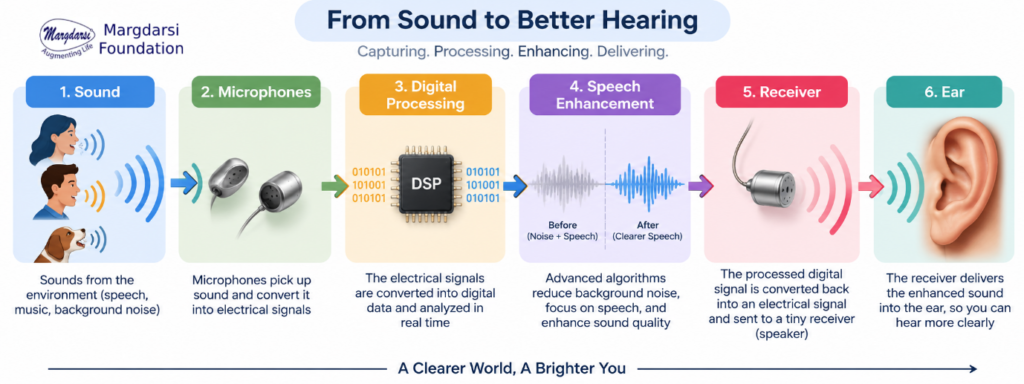
A hearing aid is a small electronic medical device that receives sound, processes and amplifies selected sounds, and delivers the processed sound into the ear to help a person with hearing loss communicate more effectively.
For senior citizens, hearing aids are commonly used for age-related sensorineural hearing loss, although hearing difficulties can also result from earwax, infections, medication-related damage, noise exposure and other medical conditions.
WHO identifies age-related hearing loss, chronic diseases, noise exposure and certain medicines among important causes of hearing loss.
Quick recap:
- Hearing aids amplify and process sound; hearing aids do not restore normal hearing.
- Age-related hearing loss is a common reason senior citizens need hearing assistance.
- A hearing assessment should determine whether a hearing aid is appropriate.
- Some hearing problems require medical treatment rather than a hearing aid.
Age-Related Hearing Loss in Senior Citizens
How Hearing Aid Technology Works Today
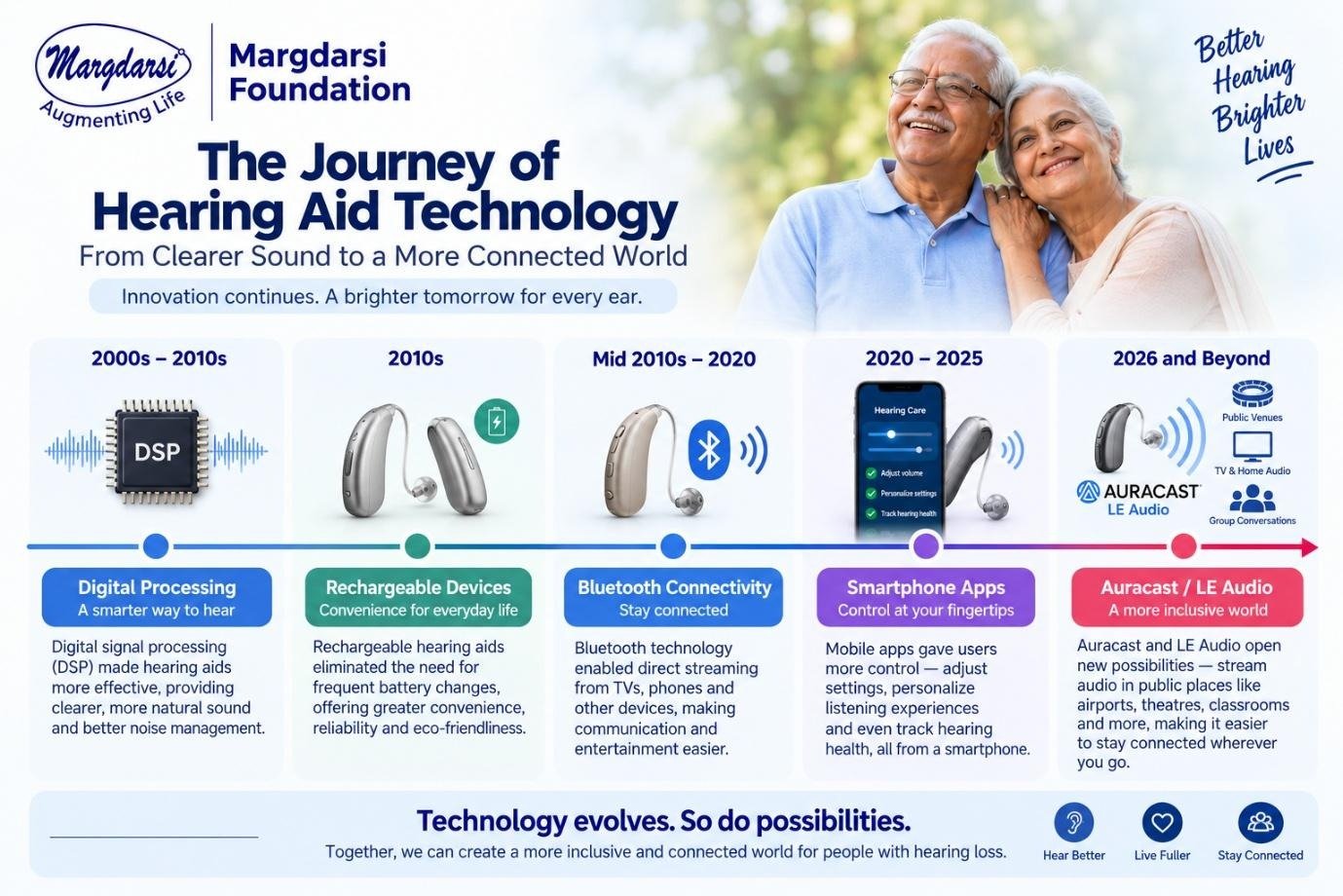
Modern hearing aids are considerably more sophisticated than traditional sound amplifiers. Digital hearing aids can process incoming sound, distinguish speech from background noise, automatically change settings according to the listening environment and connect wirelessly to compatible smartphones and other devices.
WHO reports that more than 1.5 billion people currently live with some degree of hearing loss, while approximately 430 million people have disabling hearing loss requiring rehabilitation. WHO also reports that around 30% of people older than 60 have hearing loss.
Quick recap:
- Digital hearing aids can process sound rather than simply increase overall volume.
- Modern hearing aids can support conversations in different acoustic environments.
- Wireless connectivity can connect compatible hearing aids with phones and other devices.
- Hearing rehabilitation is an important part of managing hearing loss.
For example, Phonak’s Audéo Lumity range includes rechargeable models, Bluetooth connectivity and technologies designed to improve speech understanding in challenging listening environments.
Choose the Hearing Aid Based on the Hearing Test
The hearing test should be the starting point for choosing a hearing aid in Bhubaneswar, rather than choosing a device solely because of its brand, appearance or price.
An audiologist can assess hearing thresholds and speech understanding and determine the type and degree of hearing loss. An ENT evaluation may also be appropriate when symptoms suggest an underlying medical condition.
The FDA similarly recommends professional evaluation when medical concerns exist and notes that audiological testing can help determine the type and amount of hearing loss.
Pure-tone audiometry
Pure-tone audiometry measures how softly a person can hear different frequencies.
The resulting audiogram helps the hearing professional understand whether hearing loss is mild, moderate, severe or profound and which frequencies are most affected.
Quick recap:
- An audiogram provides the foundation for hearing-aid programming.
- Different degrees of hearing loss require different levels of amplification.
- Speech understanding should also be considered when evaluating hearing needs.
Check both ears
Many older adults have hearing loss in both ears. When appropriate, two hearing aids may provide better access to sound from both sides than using only one device.
The FDA notes that most people with hearing impairment will need two hearing aids because both ears are often affected.
Pure Tone Audiometry and Hearing Test Guide
Choose a Senior-Friendly Hearing Aid Style
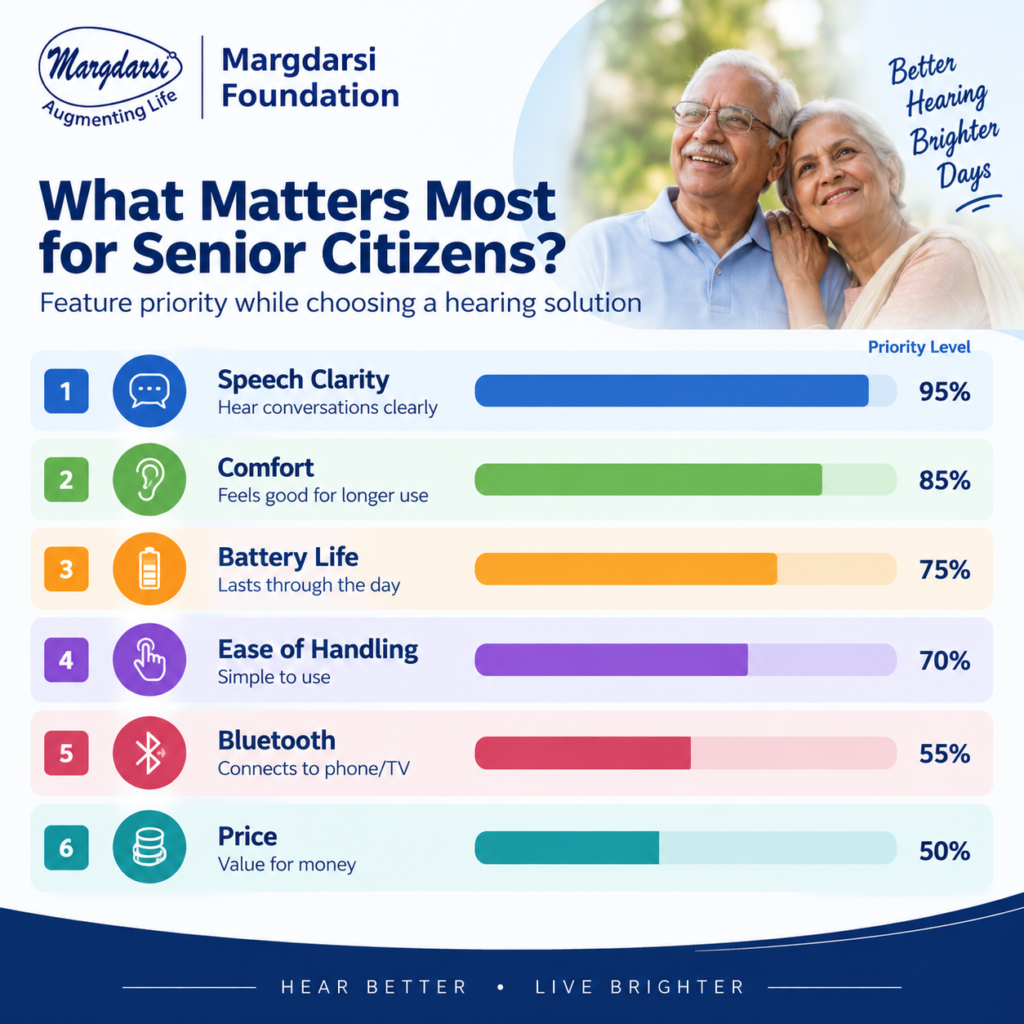
The best hearing aid for a senior citizen is not necessarily the smallest hearing aid. Ease of handling, visibility, battery management, comfort and reliability often matter more than making the device almost invisible.
Behind-the-ear hearing aids
Behind-the-ear (BTE) hearing aids sit behind the ear and connect to the ear through tubing or a receiver system.
BTE designs can be useful when a person needs more amplification or has difficulty handling very small devices.
Best suited for:
- Seniors who prefer easier handling
- Moderate to severe hearing loss
- Users who want a larger physical control
- People who prioritize durability and accessibility
Receiver-in-canal hearing aids
Receiver-in-canal (RIC) hearing aids place the receiver closer to the ear canal while keeping the main body behind the ear.
RIC devices are popular because they combine a relatively discreet appearance with modern connectivity and rechargeable options.
Best suited for:
- Seniors wanting a discreet design
- Mild to moderately severe hearing loss, depending on model
- Smartphone users
- Users interested in rechargeable technology
In-the-ear and in-the-canal hearing aids
ITE and ITC hearing aids are positioned inside or partly inside the ear. These designs can be attractive to people who prefer fewer components behind the ear.
However, smaller devices can be harder for some senior citizens to insert, remove, clean and adjust.
Quick recap:
- BTE hearing aids prioritize handling and power.
- RIC hearing aids balance discretion, comfort and modern connectivity.
- ITE and ITC hearing aids offer more in-ear designs but can require greater dexterity.
- Senior citizens should prioritize usability rather than choosing the smallest available device.
Prioritize Features That Improve Everyday Communication
A senior citizen should not pay for every available hearing-aid feature. The right approach is to identify which features solve the user’s actual communication problems.
- Speech enhancement
Speech enhancement technologies attempt to make voices easier to understand, particularly when background sound is present.
Useful for: family gatherings, restaurants, social events and conversations with multiple people.
- Noise management
Background noise can make hearing difficult even when the volume of the speaker is adequate.
A good hearing-aid fitting should address the environments where the senior citizen actually spends time.
Useful for: markets, temples, family functions, restaurants and busy outdoor areas.
- Rechargeable batteries
Rechargeable hearing aids can remove the need to regularly replace small disposable batteries.
Useful for: seniors who find tiny batteries difficult to handle.
- Bluetooth connectivity
Bluetooth-compatible hearing aids can connect with compatible smartphones and other devices for calls, media and other audio applications.
For example, Phonak’s current product range includes hearing aids with Bluetooth connectivity and smartphone-app controls.
- Simple controls
A hearing aid with a sophisticated smartphone app may not be useful if the wearer rarely uses a smartphone.
For many senior citizens, simple volume controls, automatic programs and easy charging can be more valuable than advanced app functionality.
Quick recap:
- Speech enhancement can support conversations.
- Noise management can improve listening in busy environments.
- Rechargeable batteries can simplify daily handling.
- Bluetooth can improve phone and media connectivity.
- Simple controls can improve usability for senior citizens.
Hearing Aid Types Comparison
| Hearing Aid Type | Main Advantage | Possible Limitation | Senior-Friendly Factor |
| BTE | Good power and easier handling | More visible | High |
| RIC | Discreet and technologically advanced | Smaller components | High |
| ITE | Easy access to controls on some models | More visible inside ear | Moderate–High |
| ITC | More discreet than ITE | Smaller controls | Moderate |
| CIC | Very discreet | Can be difficult to handle | Lower for some seniors |
The appropriate style depends on hearing loss, ear anatomy, dexterity, lifestyle, cosmetic preference and ability to operate the device.
Quick recap:
- BTE and RIC designs are often practical choices for older adults.
- Smaller hearing aids are not automatically better hearing aids.
- Professional fitting should determine the appropriate style and power level.
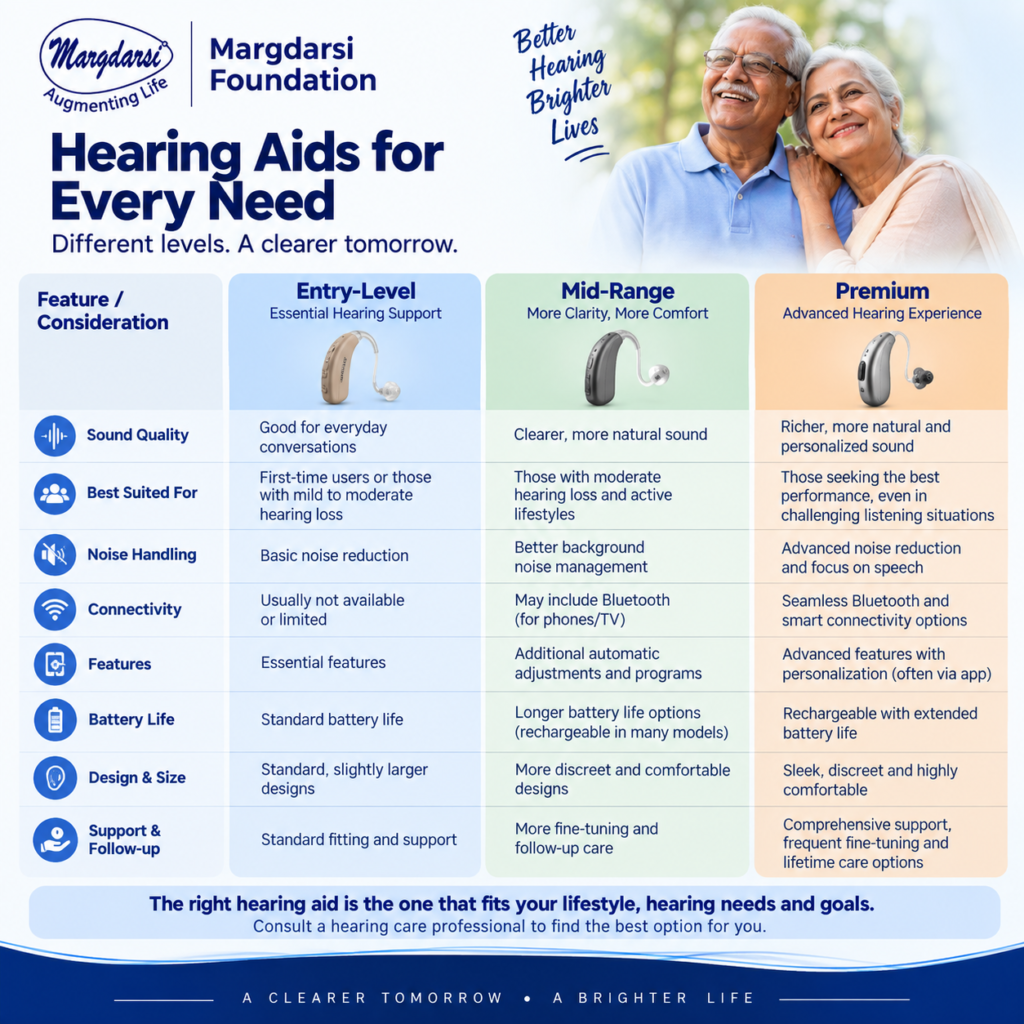
Consider Cost, Warranty and After-Sales Service
Searching for hearing aid price in Bhubaneswar is understandable, but price alone should not determine the purchase.
The total value of a hearing aid includes the device, hearing assessment, fitting, programming, follow-up adjustments, warranty, repairs, batteries or charging accessories and after-sales support.
What affects hearing aid cost?
Hearing aid pricing can vary according to:
- Technology level
- Brand and model
- Degree of hearing loss
- Rechargeable versus disposable-battery design
- Bluetooth and connectivity
- Noise-management technology
- Accessories
- Warranty and service package
- Professional fitting and follow-up
A lower-priced hearing aid can become expensive if servicing, fitting or repairs are difficult to access.
Quick recap:
- Hearing aid price should be evaluated together with fitting and after-sales service.
- Warranty terms should be checked before purchase.
- Senior citizens should understand battery or charging requirements before buying.
- Local support in Bhubaneswar can make long-term hearing-aid ownership easier.
How to Get a Hearing Aid in Bhubaneswar From Scratch
Step 1: Identify everyday hearing difficulties
Start by documenting practical problems rather than guessing the degree of hearing loss.
Examples include:
- Frequently asking people to repeat themselves
- Increasing television volume
- Difficulty understanding speech in groups
- Difficulty hearing on the telephone
- Missing conversations from another room
- Difficulty following conversations in noisy environments
Quick recap: A senior citizen’s real-world listening difficulties provide useful information for the hearing professional.
Step 2: Schedule a hearing evaluation
Arrange a professional hearing test in Bhubaneswar with an audiologist or appropriate hearing-care provider.
The evaluation should establish whether hearing loss exists and determine the severity and pattern of hearing loss.
Quick recap: A professional hearing evaluation should precede a major hearing-aid purchase.
Step 3: Rule out medical causes
Earwax blockage, infection, sudden hearing changes, ear pain, discharge, dizziness or one-sided hearing loss can require medical evaluation.
The FDA lists symptoms such as sudden hearing changes, ear pain, discharge, significant dizziness and one-sided hearing problems among situations where professional medical assessment is important.
Quick recap: Medical symptoms should be evaluated before treating hearing difficulty as a straightforward hearing-aid requirement.
Step 4: Discuss lifestyle with the audiologist
Tell the professional where the senior citizen needs better hearing.
Examples:
- Home conversations
- Television
- Telephone calls
- Religious gatherings
- Family functions
- Outdoor activities
- Restaurants
- Travel
Quick recap: Hearing-aid programming should reflect real-life listening environments.
Step 5: Compare suitable devices
Ask for two or three appropriate options rather than comparing dozens of models.
Compare:
- Hearing performance
- Comfort
- Ease of use
- Battery or charging
- Connectivity
- Warranty
- Service
- Total ownership cost
Quick recap: A shortlist based on hearing needs is more useful than choosing from a large catalogue.
Step 6: Complete fitting and programming
The hearing aid should be adjusted according to the hearing evaluation and the wearer’s feedback.
Quick recap: Proper fitting is essential because the same hearing aid model can perform differently for different hearing profiles.
Step 7: Schedule follow-up
Hearing-aid users often need an adjustment period. Follow-up appointments can address volume, comfort, sound quality and difficult listening environments.
Quick recap: Hearing-aid fitting is a process rather than a one-time transaction.
Hearing Aid Bhubaneswar: Questions Families Should Ask
Before purchasing a hearing aid, I recommend asking the provider:
- What type and degree of hearing loss does the audiogram show?
- Does the senior citizen need one hearing aid or two?
- Which hearing-aid style is easiest for the wearer to operate?
- Is a rechargeable model appropriate?
- Does the hearing aid support the user’s smartphone?
- What is included in the fitting and follow-up service?
- How long is the warranty?
- Where can repairs and maintenance be completed?
- Are accessories included or sold separately?
- What happens if the senior citizen cannot adjust to the device?
Quick recap: The best hearing-aid provider should explain hearing loss, device selection, fitting, pricing and after-sales support, not simply quote a product price.
A useful local example is Bhubaneswar Hearing & Speech Therapy Clinic (BHSTC), which states that it provides hearing assessments including Pure Tone Audiometry and hearing-aid trials and fitting. Another Bhubaneswar provider, Naaraayan Center of Speciality Care for Hearing & Speech, lists diagnostic audiology, hearing aids and aural rehabilitation services for patients including senior citizens.
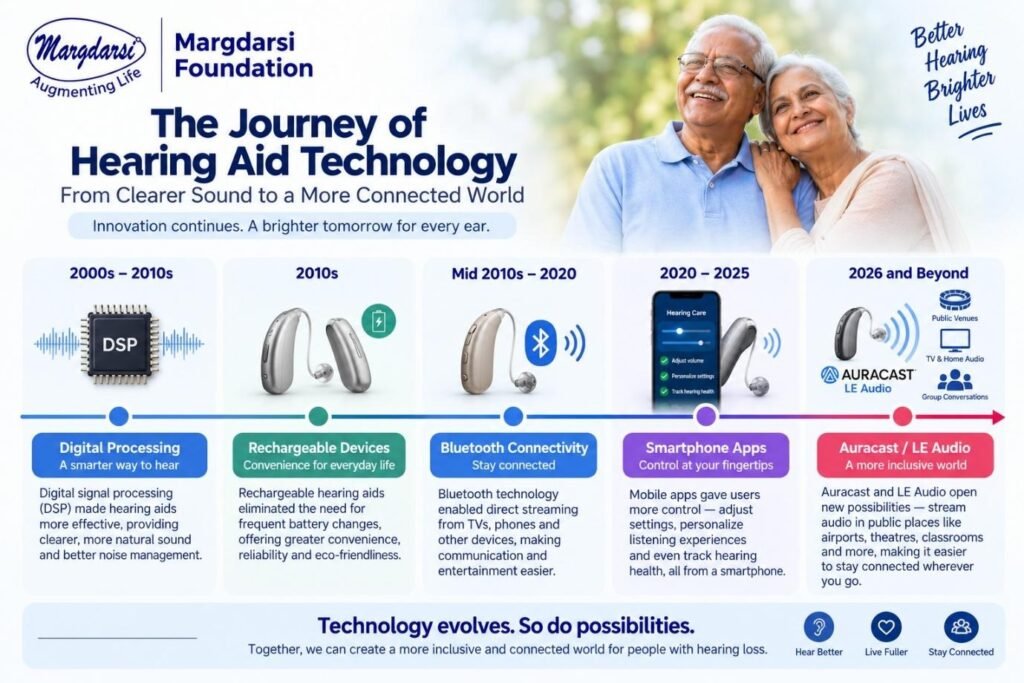
Hearing Aid Trends to Watch in 2026
AI-assisted sound processing
Modern hearing aids increasingly use sophisticated algorithms to classify sound environments and prioritize speech.
The important question for senior citizens is not whether a hearing aid has an “AI” label, but whether the technology produces better speech understanding and easier listening in the user’s actual environments.
Rechargeable hearing aids
Rechargeable devices are becoming increasingly practical for people who dislike handling small disposable batteries.
Quick recap: Rechargeable hearing aids can simplify daily routines for senior citizens.
Bluetooth and smartphone integration
Wireless connectivity is increasingly becoming a standard expectation rather than a luxury feature.
Auracast and LE Audio
Auracast broadcast audio is an emerging Bluetooth technology designed to allow compatible devices, including hearing aids, to receive broadcast audio from public venues and other sources.
Google reported in 2025 that Android support for Auracast was expanding, including compatibility with selected hearing aids and devices using newer Bluetooth LE Audio capabilities. The Bluetooth SIG describes Auracast as a next-generation assistive-listening technology.
Quick recap:
- AI-assisted sound processing is becoming more sophisticated.
- Rechargeable hearing aids are increasingly convenient for older adults.
- Bluetooth connectivity is expanding the role of hearing aids beyond basic amplification.
- Auracast could improve access to broadcast audio in compatible public spaces.
FAQ
What is the best hearing aid for senior citizens in Bhubaneswar?
The best hearing aid for a senior citizen in Bhubaneswar is the device that matches the person’s hearing loss, communication needs, comfort, dexterity, lifestyle and budget. A professional hearing evaluation should guide the selection.
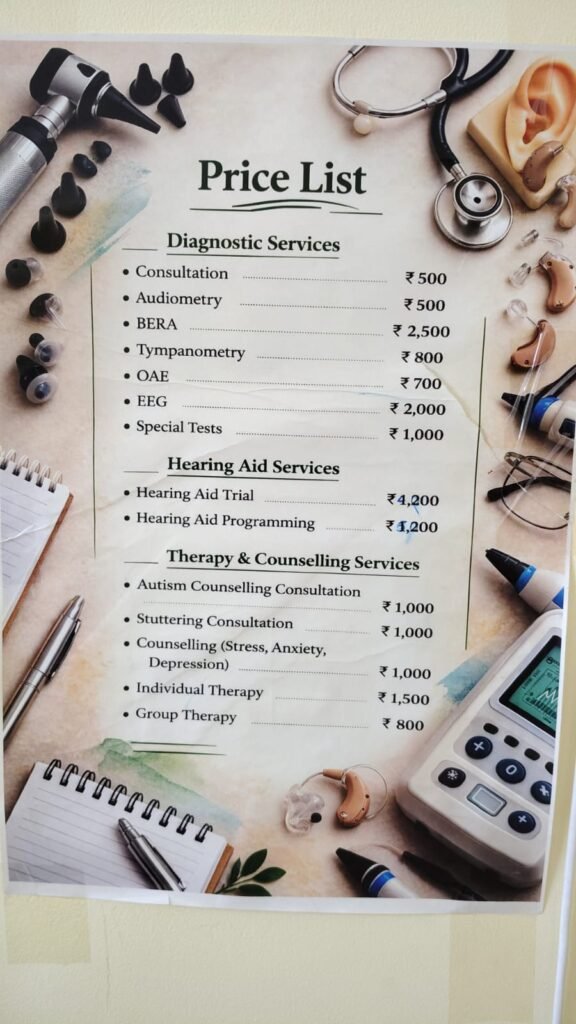
How much does a hearing aid cost in Bhubaneswar?
Hearing aid prices in Bhubaneswar vary by brand, technology level, hearing-loss severity, features, accessories, fitting and after-sales service. A provider should give a complete cost breakdown rather than quoting only the device price.
Which hearing aid is easiest for elderly people to use?
Rechargeable BTE and RIC hearing aids can be practical options for many elderly users because they can reduce battery-handling requirements and provide accessible controls. The most suitable design depends on the person’s hearing loss and manual dexterity.
Is a hearing test necessary before buying a hearing aid?
A professional hearing evaluation is strongly recommended before purchasing a hearing aid because the hearing test identifies the type and severity of hearing loss and helps determine appropriate amplification. Medical evaluation may also be necessary when symptoms suggest an underlying ear condition.
Can senior citizens get a hearing test at home in Bhubaneswar?
Some hearing-care providers in Bhubaneswar offer home-visit hearing services for older adults who have difficulty travelling to a clinic. Home-based services can be particularly useful for seniors with mobility or accessibility challenges; availability should be confirmed with the provider.
Conclusion
Choosing a hearing aid in Bhubaneswar for a senior citizen should begin with the person’s hearing assessment and daily communication needs—not with the smallest device or the lowest advertised price.
A reliable decision process is straightforward: test the hearing, identify the type and severity of hearing loss, discuss lifestyle requirements, compare suitable hearing-aid styles, evaluate total ownership cost, complete professional fitting and schedule follow-up adjustments.
The World Health Organization emphasizes that hearing loss can be addressed through timely identification, appropriate intervention and rehabilitation, while hearing technologies such as hearing aids can help people with hearing loss participate more effectively in daily life.
SENIORS & HEARING Actionable Tips & Worksheets for a More Vibrant Golden Age
Download Our Senior Citizen Hearing-Aid Buying Checklist before visiting a hearing-care professional.